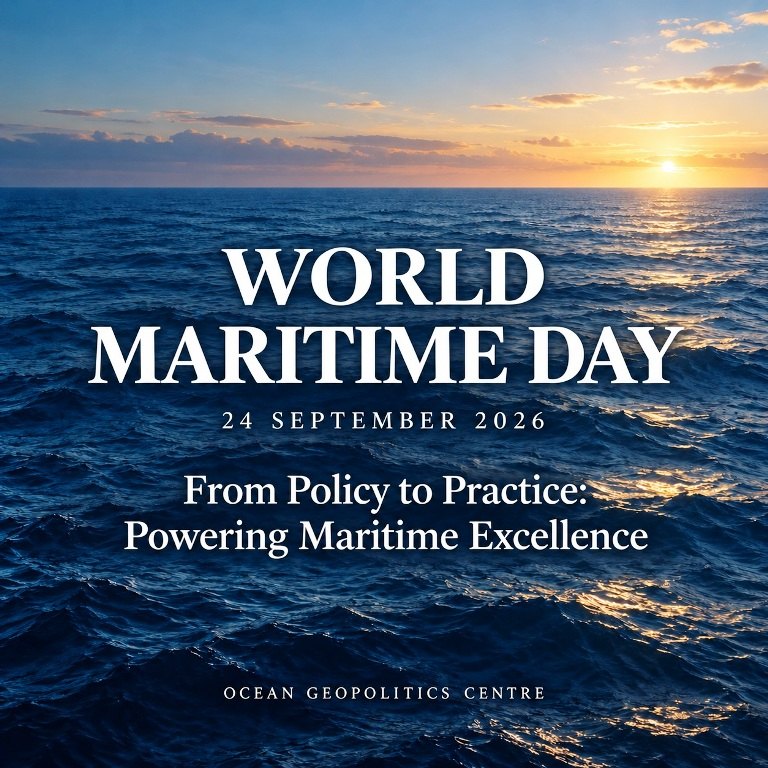
On 24 September 2026, the international community marked World Maritime Day. It is one of several occasions during the year that ask us to pay attention to the sea. Their names can sound similar, but each directs our attention towards a different part of a larger reality: the health of the ocean, the people who work upon it, the opportunities open to women in maritime professions, and the systems that keep ships moving safely between continents.
For the Ocean Geopolitics Centre, these days are most valuable when considered together. The ocean is a living environment, a place of work, a route for trade and a strategic space. A decision about shipping can affect marine ecosystems. A decision about environmental protection can affect ports and coastal communities. Neither can be understood fully without the knowledge and experience of the people who work at sea.
18 May — International Day for Women in Maritime
This day draws attention to women’s participation and leadership across the maritime sector. Its significance extends beyond recognition. A sector preparing for technological, environmental and strategic change needs access to talent and experience throughout society. Removing barriers to maritime careers is therefore part of strengthening the institutions on which the sector depends.
8 June — World Oceans Day
This is the broadest environmental occasion in the calendar. It invites us to consider marine biodiversity, pollution, climate change and the relationship between ocean health and life on Earth. From the Centre’s perspective, protection also depends on observation and understanding. Scientific knowledge must reach the institutions capable of acting upon it, while decisions about the ocean must take account of their consequences over time.
25 June — Day of the Seafarer
Global trade is often described through cargo volumes, routes and ports. This day restores the people to that picture. Seafarers keep essential goods moving, frequently while working far from home and under demanding conditions. Their safety, welfare and professional knowledge deserve attention throughout the year. Maritime policy becomes credible when its effects can be felt by those who carry it out.
The final Thursday of September — World Maritime Day
Led by the International Maritime Organization, this occasion focuses attention on shipping, maritime safety, security and environmental responsibility. The theme for 2026 and 2027, “From Policy to Practice: Powering Maritime Excellence,” makes an especially important point: international commitments achieve their purpose through implementation. Rules must shape training, inspection, working conditions and daily operations aboard ships and in ports.
Together, these observances describe a connected agenda. World Oceans Day asks what we must protect. The Day of the Seafarer asks whom we must recognise and support. International Day for Women in Maritime asks who has the opportunity to participate and lead. World Maritime Day asks how the sector can turn shared commitments into reliable practice.
These occasions should not become isolated entries in a calendar. Together, they show why maritime questions cannot be divided neatly into environmental, human, commercial and strategic concerns. The same ocean connects them all. Understanding those connections is central to the work of the Ocean Geopolitics Centre.
The Ocean Geopolitics Centre approaches that agenda through research, dialogue and cooperation across disciplines. Oceanography, engineering, law, economics, naval studies and international relations each reveal something essential; their greatest value emerges when their insights inform one another. We hope these annual celebrations encourage work that continues after the dates have passed: better evidence, stronger institutions, safer navigation and wiser care for the ocean we share.
Continue the conversation through our YouTube channel, explore further articles on the OGC blog, or follow the Ocean Geopolitics Centre on LinkedIn.
Ocean Geopolitics Centre
Artur Victoria